
Writen by
Aakash Dharod
Introduction
Many businesses invest in digital marketing but still struggle to see real results. The problem usually isn’t effort — it’s structure.
Most campaigns focus only on getting attention or generating leads, without thinking about what happens before and after. That’s where a full-funnel strategy makes the difference.
Instead of treating marketing as a single step, a full-funnel approach looks at the entire customer journey — from discovery to decision.
1. Understanding the Funnel Stages
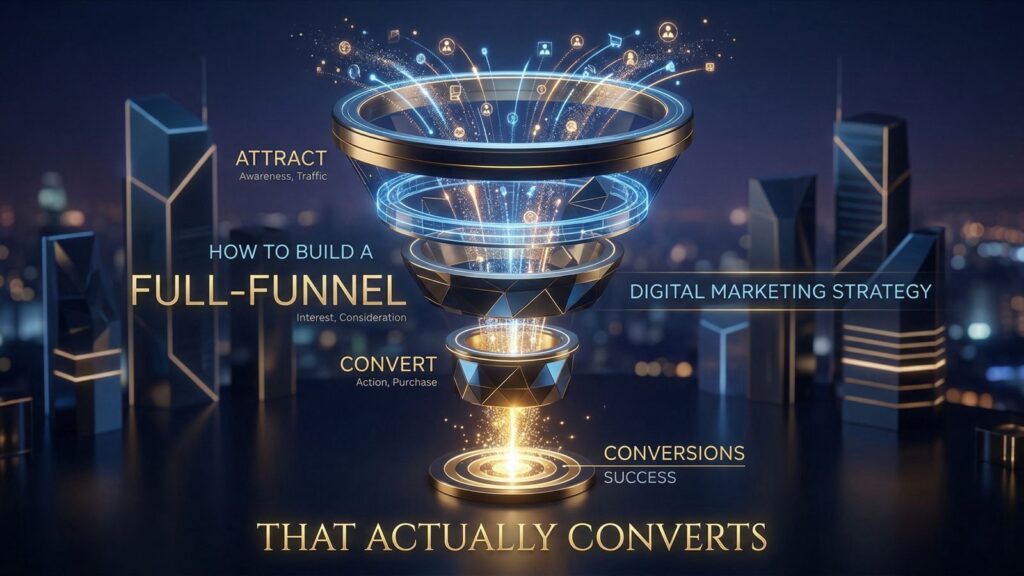
A complete digital marketing funnel is usually divided into three stages:
- Top of Funnel (Awareness) – People discover your brand
- Middle of Funnel (Consideration) – They start evaluating your offer
- Bottom of Funnel (Conversion) – They take action
Each stage requires a different type of content and strategy. Treating all audiences the same often leads to weak results.
2. Top of Funnel: Capture Attention
At this stage, your goal is simple — get noticed.
People don’t know your brand yet, so pushing sales too early doesn’t work. Instead, focus on content that attracts and educates.
Effective TOF content includes:
- Short-form videos and reels
- Informative blog posts
- Social media content
- Educational or entertaining posts
The goal here is reach and visibility, not immediate conversions.
3. Middle of Funnel: Build Trust
Once people are aware of your brand, the next step is building trust.
This is where most businesses lose potential customers. They either stop nurturing or jump directly to selling.
To keep users engaged, focus on:
- Case studies and real results
- Testimonials and reviews
- Detailed product/service explanations
- Email nurturing or retargeting
At this stage, people are comparing options — your job is to give them reasons to choose you.
4. Bottom of Funnel: Drive Conversions
This is where decisions are made.
By now, the audience already knows your brand. What they need is a clear reason to take action.
Your strategy should focus on:
- Strong call-to-actions
- Limited-time offers or incentives
- Clear pricing or value breakdown
- Simple and friction-free landing pages
The easier you make the decision, the higher your conversion rate.
5. Why Most Funnels Fail
A common mistake is focusing too much on one stage and ignoring the rest.
For example:
- Running ads without building trust
- Creating content without a clear conversion path
- Generating leads without proper follow-up
A funnel only works when all stages are connected and aligned.
Final Thoughts
A full-funnel strategy isn’t about doing more — it’s about doing things in the right order.
When your awareness, trust-building, and conversion strategies work together, results become more predictable and scalable.
At Limitless Marketing, we help brands build structured digital systems that guide customers from first interaction to final conversion — creating consistent and scalable growth over time. Because real marketing success isn’t random, it’s designed. 🚀📊
📞 Contact us today to start scaling with performance marketing.