
Writen by
Aakash Dharod
Introduction
In digital marketing, getting traffic is only half the battle. The real challenge is converting that traffic into leads, customers, or inquiries. That’s where landing pages play a crucial role.
A well-designed landing page can turn casual visitors into paying customers. But in 2026, the expectations of users have changed. People want clarity, speed, and relevance within seconds. If a page feels confusing or slow, they simply leave.
So the question is — what actually makes a landing page convert today?
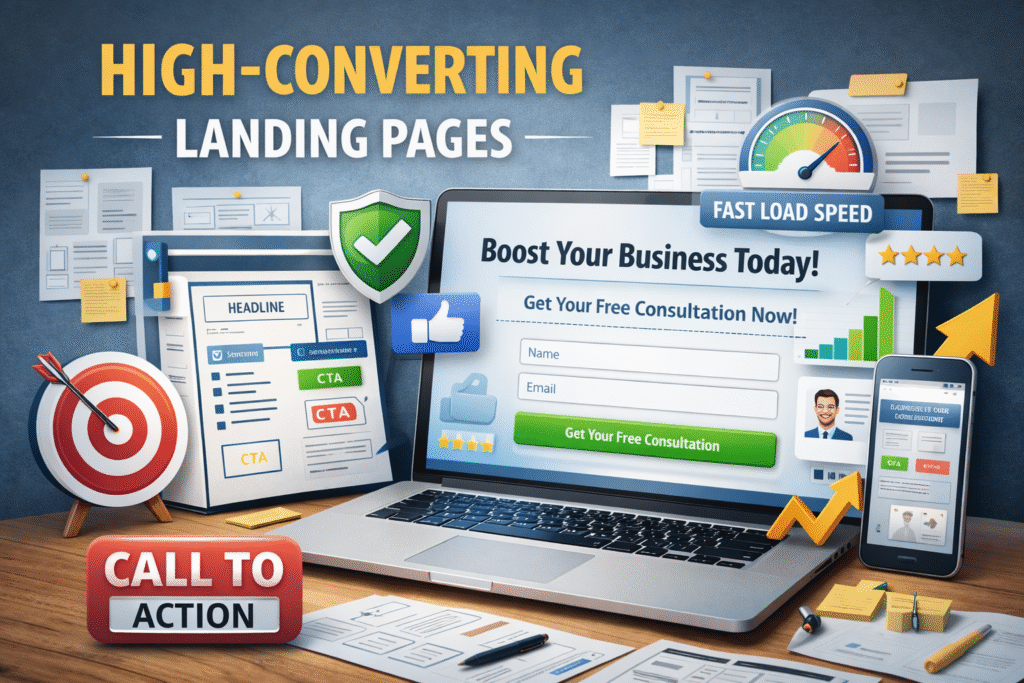
01. Start With a Clear Value Proposition
The first few seconds on a landing page decide whether a visitor stays or leaves. Your headline should immediately communicate what you offer and why it matters.
Instead of vague messaging, focus on clarity. A visitor should instantly understand the benefit they will get. Strong value propositions usually answer three simple questions:
- What is the product or service?
- Who is it for?
- Why is it better or different?
When these answers are clear, visitors feel confident enough to explore further.
02. Design for Simplicity, Not Complexity
Many landing pages fail because they try to include too much information. In reality, a high-converting page focuses on one goal.
This means removing unnecessary distractions such as extra navigation links, unrelated content, or multiple offers. A clean layout guides visitors naturally toward the action you want them to take.
Key elements that help improve clarity include:
- Clear sections with proper spacing
- Simple and readable fonts
- Visual hierarchy that highlights the most important information
- Mobile-friendly layouts
The easier the page is to scan, the more likely visitors are to stay engaged.
03. Build Trust Before Asking for Action
Visitors are cautious online, especially when they are asked to fill out forms or make purchases. That’s why trust signals are essential.
Effective landing pages usually include:
- Customer testimonials
- Case studies or success stories
- Client logos or partnerships
- Ratings and reviews
These elements reassure visitors that others have already trusted your brand.
04. Focus on One Strong Call-to-Action
A landing page should have a single, clear action. When users see too many options, they often choose none.
Your call-to-action should be visible and easy to understand. Instead of generic phrases like “Submit,” use language that highlights the benefit, such as “Get Your Free Consultation” or “Start Your Free Trial.”
Placement also matters. A strong CTA usually appears:
- Near the top of the page
- After key information sections
- At the end of the page
This ensures visitors can take action whenever they feel ready.
05. Speed and Mobile Experience Matter More Than Ever
In 2026, most users visit websites from mobile devices. If a landing page loads slowly or doesn’t display properly on mobile, conversions drop immediately.
To improve performance:
- Optimize images and media files
- Use fast hosting and lightweight design
- Ensure mobile responsiveness
- Keep loading times under a few seconds
Speed directly impacts both user experience and conversion rates.
Final Thoughts
A high-converting landing page isn’t about flashy design or complicated features. It’s about clarity, trust, and guiding visitors toward one simple action.
Brands that focus on user experience, clear messaging, and data-driven improvements consistently see better results from their landing pages.
At Limitless Marketing, we help brands build consistent digital systems that create steady, scalable growth over time. Because strong marketing isn’t just about attracting attention — it’s about turning that attention into real results. 🚀📈
📞 Contact us today to start scaling with performance marketing.